
This side-by-side comparison table outlines core differences between salvage title notices and repairable auto repair estimates. Both documents are generated after a vehicle sustains damage that meets an auto insurance carrier’s reporting threshold for total loss evaluation, but they serve distinct administrative and claims processing purposes. This reference page is designed for personal auto claims file organization, and guidance from Clause Shelf recommends retaining both documents in your primary claims folder for easy access during title transfer or appeal proceedings. No content on this page binds coverage or determines claim outcomes, so always direct questions about your specific documents to the issuing party, licensed adjuster, or state motor vehicle agency.
Salvage Notice Form Sections
All standard salvage title notices follow a state-mandated structure designed to ensure consistent disclosure of total loss status to all relevant parties. The first mandatory section is the vehicle identification block, which includes the VIN, year, make, model, license plate number, registered owner name and mailing address, and official date of loss. The second section is the salvage classification block, which lists the state-specific salvage code assigned to the vehicle, the total loss valuation calculation reference used to support the classification, and required disclosure language that will appear on all future vehicle titles issued for the unit. The third section is the issuer confirmation block, which includes the signature of an authorized claims representative, the carrier’s state-issued identification number, the date of notice issuance, and contact information for filing an appeal of the total loss designation. The final standard section is the state filing note, which outlines the mandatory submission deadline to the local department of motor vehicles, plus instructions for owner surrender of the original vehicle title if the claim is settled as a total loss. Before filing the notice in your claims folder, cross-check that all sections are fully completed with no blank fields, as missing information can delay title processing or appeal proceedings later.
Repairable Estimate Column Details
Repairable auto repair estimates use a standardized column structure to itemize all costs associated with restoring a vehicle to pre-loss condition, regardless of whether you plan to file an insurance claim or pay for repairs out of pocket. The first column is the sequential line item number, assigned to each repair or replacement task to enable cross-reference with part invoices, labor time logs, or adjuster review notes. The second column is the part description and designation field, which notes whether each required part is original equipment manufacturer (OEM), aftermarket certified, or used, plus the official part number for ordering and verification purposes. The third column lists labor hours and applicable rate, broken out by repair category (body work, mechanical, electrical, paint, detailing) and multiplied by industry standard labor time for each specific task. The fourth column is the sublet repair line, reserved for work outsourced to third-party specialists such as auto glass replacement providers, frame straightening technicians, or airbag reset specialists, with vendor contact information attached as a separate addendum to the estimate. The final column is the cost total column, which sums part costs, labor costs, sublet costs, and applicable taxes, with a separate line for deductible deduction if the estimate is submitted to your insurance carrier for claim payment. Before approving any work, verify that each column entry matches the repair scope you agreed to with your selected shop, and flag any unapproved add-ons for clarification before signing.
Table Comparison Box Entries
The table below outlines core differentiators between the two documents for quick reference when organizing your claims file. All entries are for general education only, so confirm state-specific requirements with your local DMV or licensed claims professional.
| Comparison Category | Salvage Title Notice | Repairable Estimate |
|---|---|---|
| Core Administrative Purpose | Formal legal notification that a vehicle meets state-mandated total loss thresholds, triggering mandatory title reclassification for all future registration and sale | Itemized breakdown of all parts, labor, and associated costs required to restore the vehicle to pre-loss condition, used for claim payment processing or personal repair planning |
| Authorized Issuing Party | Issued exclusively by a licensed auto insurance carrier or state motor vehicle department, per state salvage title legislation | Issued by a licensed auto body repair shop, independent damage appraiser, or insurance carrier appraisal department |
| State Filing Requirement | Requires mandatory submission to the state DMV within a set window post-issuance. Illustrative example: some states require submission within 15 days for passenger vehicles under 10 years old, while others allow up to 30 days for older vehicles | No mandatory state filing requirement; retained only in personal claims files, repair shop records, or carrier claims archives for reference |
| Formal Appeal Eligibility Window | Subject to a state-mandated appeal window of 15 to 45 days from issuance, during which owners may dispute the total loss classification and request a third-party re-appraisal | No formal regulatory appeal window; revisions to line items or cost totals may be requested at any time before repair work commences |
| Permanent Record Status | Becomes a permanent entry on the vehicle’s official title history, accessible to all future buyers, insurance carriers, and vehicle registration agencies | Not added to the vehicle’s permanent title history; only retained as part of individual claim or repair records, with no mandatory public disclosure requirement |
Document Reference Note Placement
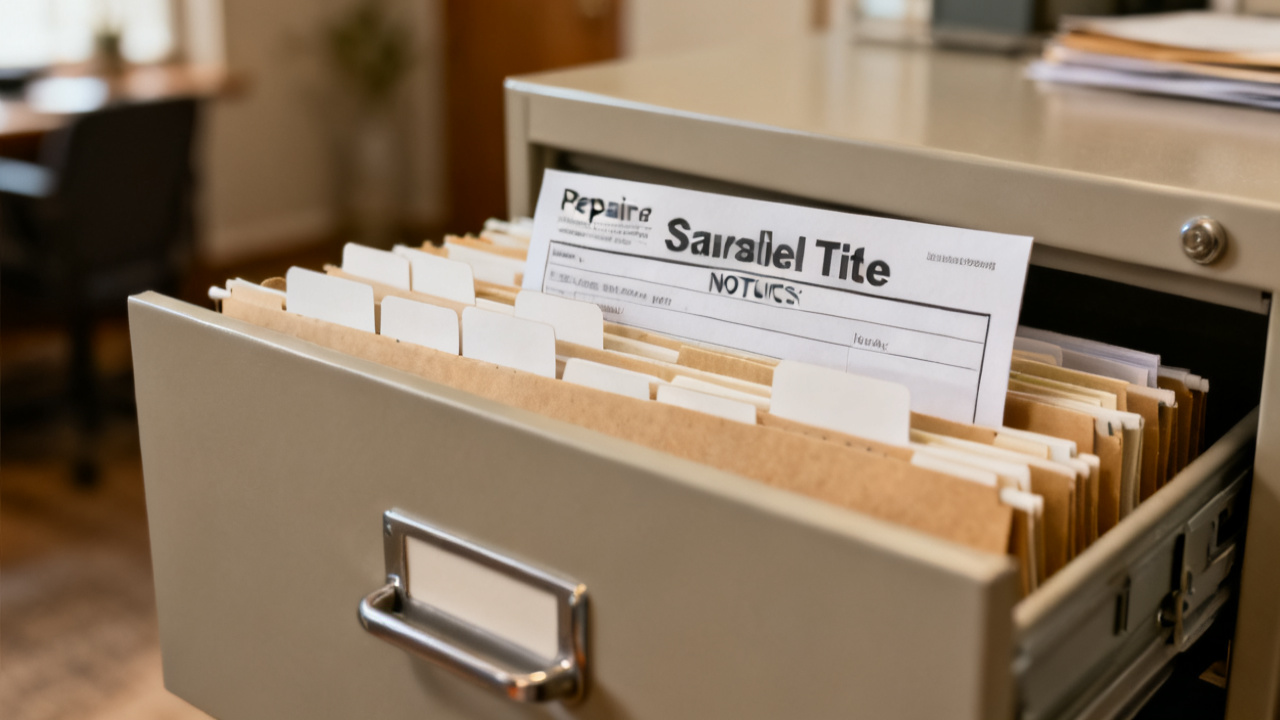
Consistent note placement on both documents will streamline cross-reference during claims reviews, appeal proceedings, or future vehicle sale disclosures. For salvage title notices, place a removable sticky note on the top right corner with the date you received the notice, the full name of the carrier representative you first spoke to about the designation, and the final deadline for filing an appeal if you choose to dispute the classification. Write your full claim number clearly in the top blank margin of the notice, so it can be matched to your core claims file instantly if you submit it for review. For repairable estimates, add handwritten notes directly next to any line items you are questioning, with the date you contacted the repair shop to discuss the discrepancy and the name of the shop representative who provided clarification. If you approve the estimate as written, sign and date the bottom margin, and add a short note indicating whether you will be submitting the estimate to your carrier for reimbursement or paying for repairs out of pocket. Guidance from Clause Shelf recommends using the same pen color and note formatting for both documents to avoid confusion when sorting through multiple claims files for household vehicles.

Cross-Reference Schedule Line Items
Add the following line items to your personal auto claims cross-reference schedule to link the two documents and track critical processing deadlines. First, add a VIN verification line: confirm that the 17-digit VIN listed on the salvage title notice matches exactly the VIN listed on the repairable estimate, to avoid mixing up documents for multiple vehicles in your household. Second, add a total loss threshold cross-check line: if you have a repairable estimate that totals less than the total loss valuation listed on the salvage notice, note the difference in amounts, the date you requested a re-appraisal, and the contact information for the independent licensed appraiser you selected to conduct the review. Third, add a deadline tracking line: record both the salvage notice appeal deadline and the repairable estimate expiration date (if listed) on your schedule, with calendar reminders set 7 days before each deadline to avoid missing processing windows that could impact your claim outcome. Fourth, add a receipt attachment log line: note any supporting documents attached to either form, such as repair shop invoices, appraiser reports, or DMV correspondence, with a unique identifier for each attachment so you can locate it quickly during claim reviews or appeal hearings. Fifth, add a copy distribution line: note how many copies of each document you have made, and where each copy is stored (e.g., home safe, glove box, carrier file) to ensure you can access a copy immediately if requested by a DMV representative, adjuster, or potential vehicle buyer.
Make two physical copies of both your signed salvage title notice and approved repairable estimate, store one set in your fireproof home safe and the second set with your vehicle registration documents, and share a password-protected digital copy with your licensed insurance representative for their official records.