
This standardized limit comparison table outlines discrepancies between active general liability coverage and contracted coverage requirements for commercial construction, vendor, or professional service contracts. It is designed to be stored in your general liability insurance certificate folder for quick reference during pre-project onboarding, third-party audits, or payment application reviews. You can populate all fields directly from your active policy declarations page and the fully executed project contract, without input from a third party unless you need clarification on ambiguous limit language or coverage exclusions. Clause Shelf provides this template for personal administrative use only, and no content on this page constitutes legal or insurance advice; always consult a licensed insurance professional or legal representative to confirm compliance with binding contract terms.
Table column listing current general liability policy aggregate and per-occurrence limits
This column of the comparison table is populated exclusively from your most recent active primary general liability policy declarations page, with no estimated or projected values allowed. To ensure accuracy, cross-reference all listed limits with a certificate of insurance (COI) issued by your provider within the last 30 days, to confirm no limits have been reduced, endorsements added, or coverage lapsed since the start of your policy term. Exclude any umbrella or excess policy limits from this column unless explicitly requested in the contract language, as this section only captures primary general liability coverage amounts that will be accessed first in the event of a claim. You should also note any policy endorsements that restrict coverage for specific project activities in the notes column of the table, even if the numerical limit meets the contract requirement, as restricted coverage may count as a non-compliance gap during stakeholder review.

Contract schedule outlining mandatory coverage thresholds required for the signed project agreement
This column of the table pulls values directly from the insurance requirements section of your fully executed project contract, usually located in the general conditions, supplementary terms addendum, or vendor onboarding packet. Do not use draft contract language or verbal agreements to populate these values; only use figures from the final signed, dated agreement to avoid non-compliance. If conflicting threshold values appear across different sections of the contract, flag the discrepancy for your licensed broker or legal contact before finalizing the comparison, as inconsistent requirements may require formal clarification from the project stakeholder before you can adjust your coverage. For projects with multiple phases, note any phase-specific limit increases in the notes column to ensure you update your coverage or provide proof of excess limits before the start of each applicable phase.
| Coverage Limit Category | Current Primary General Liability Policy Limit | Contract Mandated Minimum Limit | Calculated Gap (Held Minus Required) | Verification Notes |
|---|---|---|---|---|
| Per-occurrence bodily injury and property damage | Illustrative example: $1,000,000 | Illustrative example: $1,000,000 | $0 | Matches required threshold, confirmed via 2024 policy dec page dated 1/1/2024 |
| General aggregate limit (annual policy term) | Illustrative example: $2,000,000 | Illustrative example: $3,000,000 | -$1,000,000 | Shortfall requires either primary limit increase or excess policy endorsement prior to project start |
| Products-completed operations aggregate limit | Illustrative example: $1,000,000 | Illustrative example: $1,500,000 | -$500,000 | Gap noted, pending quote for limit adjustment from insurance provider submitted 4/12/2024 |
| Personal and advertising injury per occurrence | Illustrative example: $1,000,000 | Illustrative example: $1,000,000 | $0 | Threshold met, no additional action needed for this coverage line |
| Medical payments per injured third party | Illustrative example: $5,000 | Illustrative example: $10,000 | -$5,000 | Minor gap, can be resolved via policy endorsement for no additional premium per provider notification 4/14/2024 |
Side note highlighting any gaps between held coverage and contract-mandated minimum limit values
This section is reserved for contextual documentation of any gaps identified in the comparison table, beyond the numerical values listed in the gap column. For gaps that can be resolved via a primary policy increase, excess/umbrella policy attachment, or formal stakeholder waiver of limits, note the specific resolution path, relevant contact names, and expected completion date in this section. For example, if the project owner agrees to waive the $1,000,000 general aggregate shortfall listed in the illustrative table, attach a signed copy of that waiver to this document and note the signatory name and date of the waiver here for audit purposes. If no gaps are identified, fill this section with a written statement confirming all held limits meet or exceed contract requirements, dated and initialed by the party completing the comparison. You can also use this section to track follow-up tasks related to gap resolution, such as scheduled calls with your broker or submission deadlines for updated COIs to the project stakeholder. Avoid using vague language in this section; all notes should be specific enough that a third party reviewing the document six months after completion can understand the status of each gap and how it was resolved.
Print form section for authorized signatures from the insurance provider and project stakeholder
Once all gaps are resolved and you have confirmed coverage fully meets contract terms, print a physical copy of the comparison document, corresponding policy dec page, and the contract’s insurance requirements section for official signature. The first signature line is reserved for an authorized representative of your insurance provider or licensed insurance broker, who will confirm that the listed current policy limits are accurate, and any adjustments made to close gaps are active as of the project’s official start date. The second signature line is for the project stakeholder or their authorized risk management representative, who will confirm that the listed contract required limits are accurate and that the presented coverage (including any excess policies used to close gaps) satisfies all contract insurance obligations. The third signature line is for your own company’s authorized management representative, who will confirm that all information presented in the comparison is complete and accurate to the best of their knowledge. Include a date field and printed name line next to each signature line to eliminate confusion during future audits or claim reviews. Collect all signatures prior to the first day of work on the project to avoid delays in job site access, payment processing, or contract penalty assessments for non-compliant coverage.
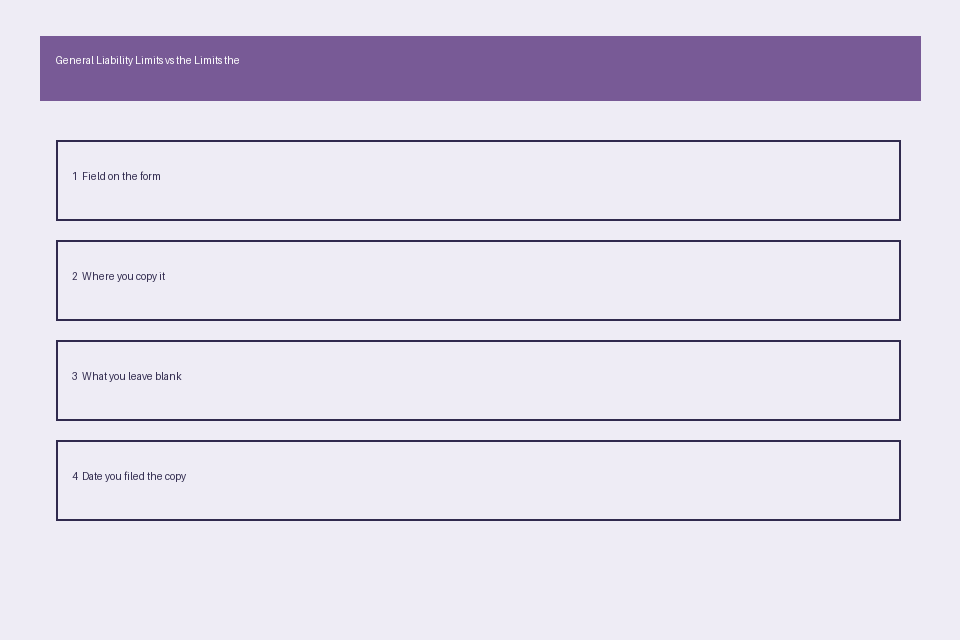
Physical folder tab marking the storage location of the signed limit comparison document
Once all signatures are collected, store three physical copies of the fully executed comparison document in designated, easily accessible folders, plus one encrypted digital copy for remote access. The first physical copy goes in your general insurance certificate folder, under a tab labeled “Project Limit Comparisons” sorted alphabetically by project name and chronologically by project start date. The second physical copy goes in the project-specific admin folder, alongside the signed contract, change orders, safety documentation, and other onboarding materials. The third physical copy goes in your accounts payable folder for the project, to be referenced when processing first payment applications that require proof of compliant coverage as a condition of payment. Save the digital copy in your company’s cloud storage system, named with the project ID, client name, and date of the comparison, so you can pull it quickly for remote audit requests or stakeholder inquiries. Keep all copies of the document on file for at least three years after the project’s final completion date, or longer if required by your state’s statute of repose for commercial contract or construction claims.
Pull your active general liability declarations page and signed project contract today to populate the first two columns of the comparison table, and flag any identified gaps for follow up with your licensed insurance broker within 3 business days.